Michael Savageau is a distinguished professor emeritus in the Departments of Biomedical Engineering, Microbiology and Molecular Genetics. His work examines the function, design and evolution of cellular and molecular networks. Savageau helped pioneer quantitative systems biology, where he characterized the design principles for gene circuits that impact cellular behavior.
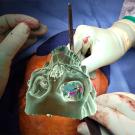
The Translating Engineering Advances to Medicine Lab has contributed to a collaborative project to improve surgical procedures using augmented reality goggles.
New Assistant Professor of Biomedical Engineering Alba Alfonso García is fascinated by the power of photonics to clarify complex biological issues. As a UC Davis researcher, she innovates biophotonic imaging technologies and translates these advancements into tools for medical professionals.
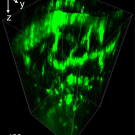
Assistant Professor of Biomedical Engineering Yi Xue has received a Maximizing Investigators' Research Award, which celebrates early-career researchers who demonstrate outstanding potential to advance biological research, for her program to advance microscopic techniques in deep tissue imaging.
Biomedical engineering professors have received Science Translation and Innovative Research grants from UC Davis to bring proof-of-concept technologies that advance human health to life, from early detection of cancer to an off-the-shelf treatment for cerebral palsy.
Through collaborations with colleagues, Associate Professor of Biomedical Engineering Anthony Passerini has worked to refine the undergraduate curriculum so that students receive the requisite knowledge and experience to succeed in future academic and industry settings.
Professor of Biomedical Engineering Jinyi Qi receives the Edward J. Hoffman Award for his advancements in molecular imaging and is celebrated for his contributions to this year’s “Image of the Year” from the Society of Nuclear Medicine and Molecular Imaging.
Professor Angelique Louie receives the 2024 Outstanding Faculty Teaching Award to celebrate her contributions to the Department of Biomedical Engineering's undergraduate program and her leadership in education across the UC Davis campus.
The American Institute for Medical and Biological Engineering has inducted biomedical engineering professor Aijun Wang into its College of Fellows, an honor reserved for the top two percent of individuals contributing to medical and biological engineering.
UC Davis researchers have developed a new catheter-based device that combines two powerful optical techniques to image the dangerous plaques that can build up inside the arteries that supply blood to the heart.