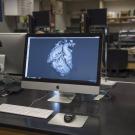
CMGI is expanding its imaging capabilities by adding Quantitative Image Analysis (QIA) services, which help users extract meaningful quantitative information from imaging data.
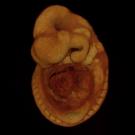
Biomedical device built by former UC Davis students and TEAM researchers takes advantage of single cell sensing and electroporation to deliver reagents into embryos in a fast, viable, and efficient manner.
A new study published by Kent Leach's group at UC Davis shows that mesenchymal stem cells (MSCs) can adapt to their environment and become resistant to low oxygen to carry out their function.
First, a replica of your heart that a doctor can hold in her hands. Next, a living sensor inside your phone that detects nearby pollutants or pathogens. That’s TEAMwork. Their motto is “What can we help you make?”
The Silva Lab is developing a new alginate hydrogel that incorporates chitosan to control the release of S1P to improve the formation of new blood vessels.
Jennifer Choi received a Committee on Research Large Grant for her project titled, “Shedding light on undergraduates’ unsatisfactory problem solving performance in STEM: The role of knowledge structure, knowledge retention, and misconceptions.” Dr. Choi will be collaborating on the project with Ozcan Gulacar (Chemistry) and Marina Crowder (Molecular and Cellular Biology).
Katherine Ferrara has received a 5-year NIH R01 for her project, “Image-guided ultrasound therapy and drug delivery in pancreatic cancer.”
Pancreatic ductal adenocarcinoma (PDAC) is an aggressive and invasive cancer, with a median survival of 6 months and a 5-year survival rate of 6%. Although recent advances have been made in the understanding of PDAC development, effective therapies are lacking.
UC Davis physician Gary Raff was treating a 19-month-old with a congenital heart defect this January when he realized he had reached a rare crossroads – he wasn’t sure what to do next. The girl had a complex constellation of arteries coming off her heart and only 1 1/4 ventricles rather than the usual two.