Research

Jamal Lewis Receives Prestigious NIH MIRA Grant

Jamal Lewis has received a National Institutes of Health of Maximizing Investigators’ Research Award (MIRA) for New and Early Stage Investigators. The grant, which will support the Lewis lab’s work to understand and exploit the phenomenon of vomocytosis, is $1.9 million over the next five years.

NIH funds project to model atrial fibrillation with heart-on-a-chip

George and his collaborators plan to create atrial tissue from a patient’s own stem cells, and induce changes in the cells using CRISPR technology (“gene editing”) to alter their protein expression so that they conduct electricity in a pattern resembling that seen in atrial fibrillation.

Paralyzed rats walk again after experimental treatment

Karen Moxon, a professor of biomedical and mechanical engineering at UC Davis, showed that a combined therapeutic regimen of drugs and physical therapy promoted cortical reorganization that bypassed a spinal cord injury, allowing paralyzed rats to walk again.

Cartilage Responds Positively to Tension: Nature Materials Paper by the Athanasiou Group

Scientists have known for 2,300 years that articular cartilage neither repairs itself nor regenerates with ease. “Cartilage, when once cut off, [does not] grow again,” observed Aristotle, the Greek philosopher and scientist, in the fourth century BC.  In the last fifty years, scientists have succeeded in creating tissue that closely resembles native cartilage, but the engineered tissue lacks the tensile values required to endure the natural strains it would encounter when implanted in human joints to replace damaged cartilage.

Immune cells are uniquely capable biodetectors

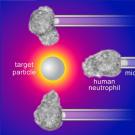
The Heinrich lab found that single human neutrophils, a type of white blood cell, are able to accurately and reliably recognize and interact with real-world pathogens such as Salmonella bacteria and Coccidioides, the cause of Valley Fever.